Class Notes
Have you got a story or memory to share?
Email us at alumni@soton.ac.uk to share your life updates and
memories of Southampton over the decades.
1950s
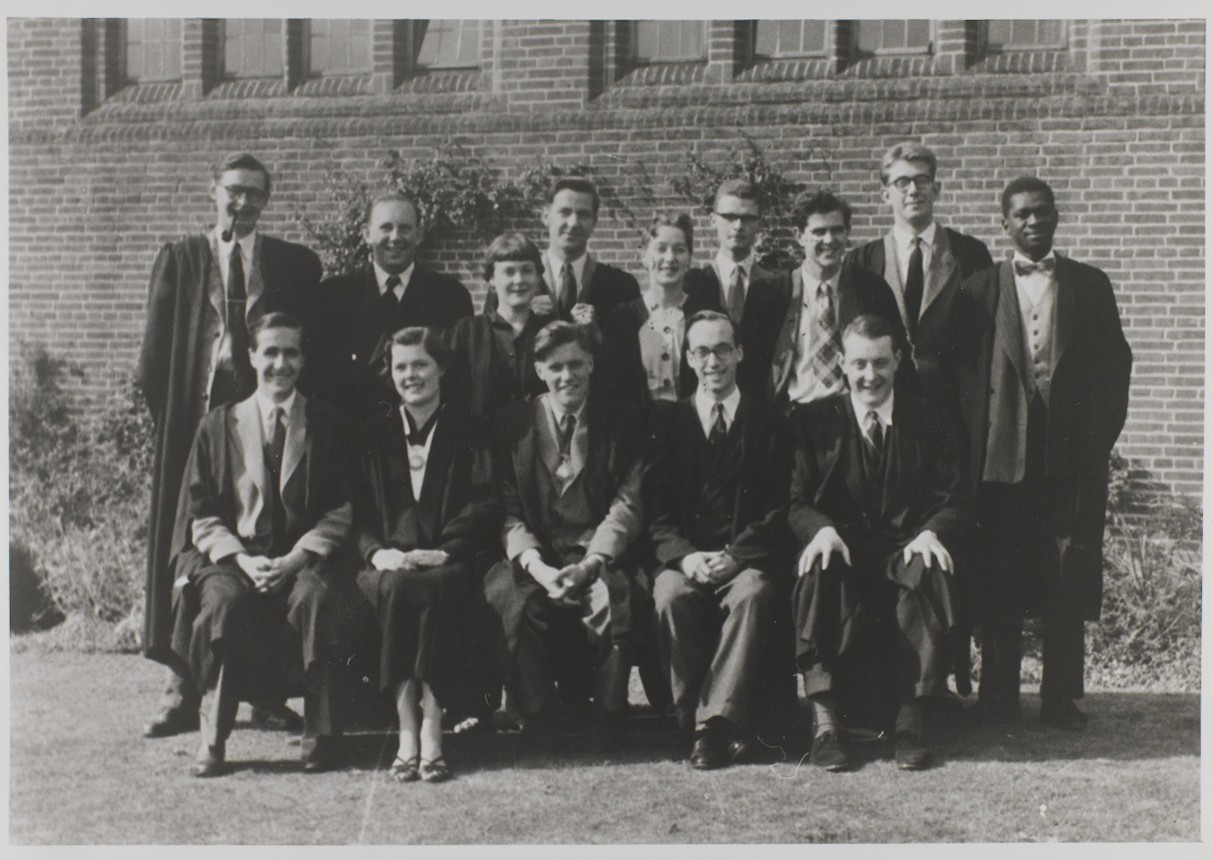
John Chapman (BSc Mathematics and Aeronautics, 1959):
I attended Southampton University from 1956 to 1959 when I graduated in Mathematics with Aeronautics. I had originally intended to do Aeronautical Engineering but when I went for interview I was persuaded to do Maths with Aeronautics instead, on an experimental course with only three of us. We did most of the Maths course and Aerodynamics and Aerostructures from the Engineering degree.
Southampton was the first British university to buy a commercial computer – a Ferranti Pegasus – I got involved immediately and it formed the base of my future career in computing. The Maths course was great and I finished up seeing mathematics as more of a philosophy than a bit of algebra and fractions. But there were so many other optional courses to try – I did Russian and Physics but gave up General Science when the lecturer carved up a heart in front of us.
It had a great social side. There were many clubs and societies, many of which I joined including playing Chess for the university (and Hampshire) and the Christian Union which brought me to many of the churches in the town. It was a place to explore – ferry to Ryde on Saturdays and to Hyde for long walks and cycle trips. I made so many friends there, some who have lasted until quite recently. But now aged 90 I look back at my time in Southampton with great fondness and compared to the many universities I did business with all over the world in my career, it was the one that really merited the title university rather than degree school.
1960s
Tony ‘Taffy’ Willcox (BSc Electronic Engineering, 1969):

“When I was at Southampton, I was Secretary of the EFS (Engineering Faculty Society) in my final year.
“After many years of news drought, I resurrected the Soton EFS ’69 Club in 2014, with help from the University to trace some members. This culminated in a very successful 50-year reunion weekend at Chilworth Manor in 2019.
“Starting in 2020, we started monthly Zoom meetings to keep in touch, with participants from the USA, Canada, Norway, Italy, Australia and, of course, the UK. You might be interested to know that last month we held our 56th Zoom call! We generally get 8-10 members, varying month by month. It has proven very interesting as we review our histories, and appreciate how lucky we have been to have had such rewarding careers.
“One of the lasting memories was seven of us taking the Toastrack bus to Switzerland – and back – on a three-week road trip. In recent times I’ve been in touch with the Toastrack committee, who have done a fantastic job in renovating the Toastrack. Indeed, Oana and Will were invited to join one of our Zoom calls some years ago. A great team.”
Anthony Bravery (BSc Botany, 1965) got in touch on the 60th anniversary of his graduation. He writes:
“July 2025 represents 60 years since my graduation from the Department of Botany (with subsidiary Zoology) at Southampton. Now living in retirement with my wife (diamond wedding anniversary this year!) near Aylesbury in Buckinghamshire. Still in touch with Martin Webster (BSc Mech Engineering, 1965) who lives nearby. Retired nearly 20 years from the Scientific Civil Service at BRE in Watford (privatised in 1997) as Director of the then Centre for Timber Technology and Construction. Among various career highlights are gaining a PhD from Imperial College, University of London, Post-Doctoral assignment at The University of Hamburg (1971), secondment to the Department of the Environment HQ in Whitehall (1977), 30+ years’ service on UK and EU Scientific Collaboration Groups and Standardisation Committees, President of the International Research Group on Wood Protection (1992-96), 32 years on the HMS Victory Technical Advisory Committee and member of the management buyout team at privatisation of BRE.
“Happy Southampton memories include following in my father’s footsteps as a Geography graduate of the University in its former guise as Hartley College, scholarship entry and resident of Connaught Hall, field courses at Port Erin in the Isle of Man with Prof Williams, in north Norfolk and The Broads with Dr Joyce Lambert; playing football for the University Second XI, attending the outstanding engineering and science faculty balls! Membership of the University Motor Club including competitive driving tests and rallying (with Martin Webster as navigator!).”
Dr Julie McGeoch (BSc Physiology and Biochemistry, 1969) who also completed her PhD at Southampton (1973), and is still working at Harvard, shared the following:
“Over the years I have been focused on protein structure and ion channel structure. For the last four years I have needed telescopes to obtain data on a space polymer termed hemoglycin.
‘Space-filling efficiency and optical properties of hemoglycin’ was published in the Monthly Notices of the Royal Astronomical Society in November 2025.
“The empty, extensive low-density lattice topology of hemoglycin is examined to understand how in space, and possibly as early as 800 Myr into cosmic time a rod-like polymer of glycine and iron came into dominance. A central question to be answered is whether the hemoglycin rod lattice with diamond 2H symmetry represents the most efficient covering of space by a regular arrangement of identical rods.”
1970s
Calling all 1976 graduates!
How are you celebrating your 50th graduation anniversary? Whether you’re hosting a party, revisiting your old haunts, or catching up with your classmates, we’d love to share your celebration plans in our next online edition.
Get in touch with us via email: alumni@soton.ac.uk
Chris Bound (Law, 1975):
Here is our friendship group, photo taken at a hotel in Corfe Castle, Dorset last October.
The core of the group is those of us that graduated from Southampton in 1975. We were good friends right from the start in October 1972. We have seen each other regularly ever since, and the group has grown to include partners and other friends. Since 2002 we have held regular 2/3-day residential reunions in Herm, Skye, Alderney and several times in Corfe Castle. We are meeting again this September at Goodwood Revival in Sussex. We have very happy memories of our time at Southampton.
Career-wise, of the Southampton law graduates Peter Leete became a social work clinician with the British Army in Germany and more latterly in Eastleigh. The rest of the law guys were solicitors. Kees also became a solicitor, and his wife Diana is too! John Kenrick was a management consultant. Pip Aitken (originally from Australia) was a property planning/development consultant.
Diana and Kees’ son Edmund (now aged 39ish) read engineering at Southampton.
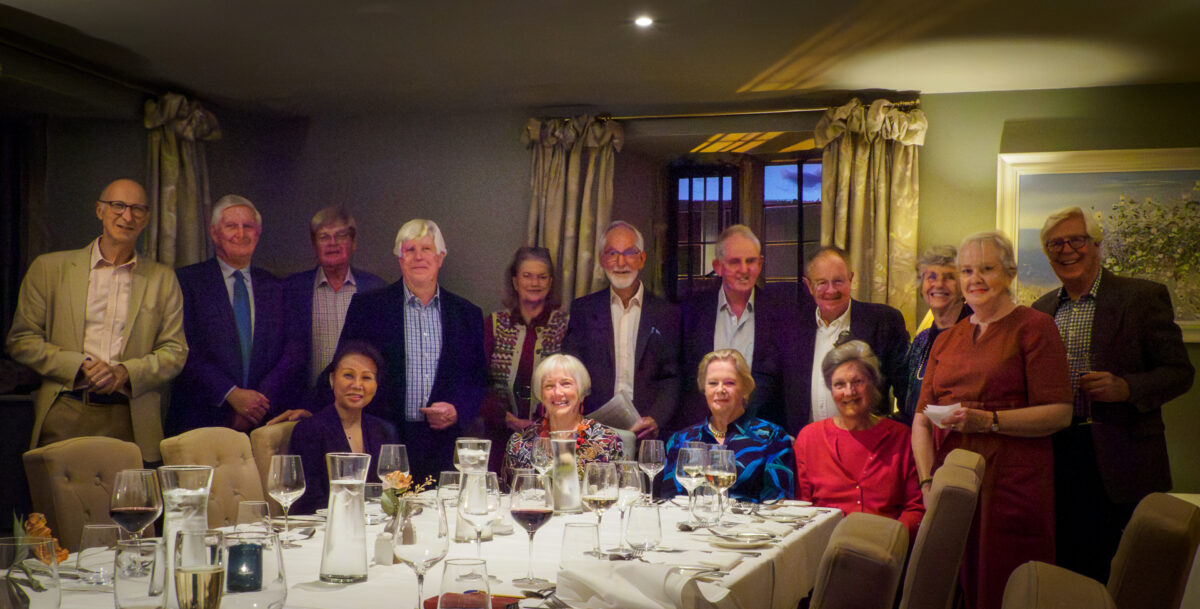
Back row from left:
Graham Barnard (law), John Kenrick (engineering), Peter Barton (law), Philippa Barton, Peter Leete (law), Myself (law), Simon Smith, Lynda Sissons (nee Palmer) (law), Diana van der Klugt, Kees van der Klugt (economics)
Front row from left:
Joy, Sheila Leete, Pip Aitken (nee Moore) (Geography), Elaine Bound
David Newby (BSc Chemistry, 1973):
I graduated on July 13th, 1973, and drove back down to Cornwall through the night to get married the next day (to get married in church in Newquay in summer the date had to be set a year in advance).
Needing a job quick, I had written to all companies in the Chemicals section of the Southampton yellow pages. My first job offer (which I accepted immediately) was with a fledgeling hazardous waste management company (Rechem) at Botley and subsequently at Fawley initially as plant chemist. The career with that company progressed through chemical emergency response and hazardous installation decommissioning. The closest to the University campus was the emergency response to deal with the hydrogen cyanide emissions from the Cymag (rat poison) factory on the Millbrook Trading Estate, the incident led to the Factory Inspectorate closing the company.
Eventually, although I was ostensibly deputy manager of the Hampshire facility, most of my time seemed to be spent running teams undertaking hazardous installation decommissioning, generally undertaken at weekends to minimise collateral risk, or dealing with chemical emergencies on the roads, in the docks or at airports. While that work was challenging and exciting, I didn’t see it as a lifelong occupation and sought a career change in 1984.
As a Cornish boy missing the grandeur of the North Cornish coast, I applied for the job of waste disposal officer for Cornwall Council, but bizarrely became head of hazardous waste regulation and control in Greater London and, as “poacher turned gamekeeper”, given the task of turning around the Council’s lamentable prosecution record (it lost 80% of cases prosecuted). In the 4 years in post I achieved that.
A responsibility I inherited with that job was taking over the development of the Council’s first electronic document management system. A responsibility I was saddled with because, oddly, at school I had trained in Fortran programming, which had led to my University Tutor (Dr Baker) suggesting my third year Chemistry project should use a Fortran program to analyse the asymmetry of Electron Spin Resonance spectra of liquid crystal compounds. The latter project endeared me to the Maths department when my program was scheduled to run during one night and managed to put the mainframe into an endless program loop.
Having turned around the enforcement record and along the way discovering that I wasn’t really compatible with a governmental or civil service role, and being a country boy at heart, I decided to resign my position and return to Cornwall. With no obvious chemistry related opportunities in Cornwall, my wife and I bought a small hotel. I had the thought that I might be able to do a little consulting work on the side.
By a strange quirk of fate, one of my last activities as head of hazardous waste regulation and control in London was to host a visit of an American looking at the environmental control sector in the UK. On the last Friday of each month I used to take my senior inspectors for a lunchtime chat at the Hole in the Wall pub in Waterloo; as this coincided with the American’s visit, he accompanied us. I mentioned my resignation and that I was returning to Cornwall and thought I might do a little consulting work. This resulted three months later in me heading to Hong Kong to lead a feasibility study for the development of the first national hazardous waste management facility in Asia, and me setting up my own consulting company David Newby Associates (DNA).
That led to a seven year succession of projects with the Hong Kong Government Environmental Protection Department assisting them with the contract development, tendering, tender evaluation, appointment of contractor, construction supervision, and overseeing first year of operation. Projects proliferated through Asia, Africa and the Middle East, generally comprising development of national strategies, plans, and legislation, and occasionally development of facilities (Thailand, Malaysia and China).
IT raised its head again with Hong Kong EPD commissioning us to develop an environmental monitoring management system application (EMMS) for use by the Hong Kong Mass Transit Railway Corporation. The application had to manage the data from environmental monitoring during the construction of the MTR line from Central to the new Hong Kong Airport (approximately 7 million samples including air emissions, noise and water samples) checking compliance and automatically reporting to HK EPD.
At this point a downturn in the tourism sector in Cornwall resulted in us running the consultancy from a 12 bed hotel with 2 bars and no guests!
The consultancy progressed through work in Russia, Former Soviet Union countries, and Eastern Europe. By now, projects were a mix of the strategy, planning, and regulatory interspersed with information system development projects, and projects for oil and gas multinationals developing plans and facilities for waste management.
At this point, in my 60s, I planned to semi-retire, with the consultancy undertaking the occasional projects, that I would find particularly interesting, for existing clients.
I failed at semi-retirement, taking on a 6 year EU funded project in Northern Cyprus, covering a wide range of waste management activities, including development of an internet based regulation and control system for the Environmental Protection Department, development of oil spill response capabilities in Famagusta, and planning animal carcass incineration. This progressed through the COVID years.
Recent activities have included development of internet based applications for municipal solid waste and plastic waste data collection and modelling; the UN Habitat Wastewise Cities Tool (WaCT), and the GIZ (German international development agency) Waste Flow Diagram (WFD) and the GUI for the World Bank PLAST Toolkit.
Now, at 75 years old, I am finally living nearly full time in Cornwall. DNA is however continuing to support the development and application of the WaCT Toolkit under a pro-bono contract with the UN, and continuing to support GIZ. For both UN habitat and GIZ, DNA is hosting and maintaining the web applications on our own hardware servers pro-bono.
Each year, I run a “freebie” afternoon session on environmental modelling methodologies for the local university environmental management course.
This unplanned career path has been truly rewarding, with some incredible experiences along the way (some hilarious, some truly scary), covering 35+ countries. So far, my work in Scandinavia has somehow missed Norway, however I have been asked to participate in a UNEP workshop on harmonisation of environmental modelling methodologies in OSLO later this month.
You really have no idea where your degree might take you!
1980s
Claire Fuller (Sculpture, 1989):
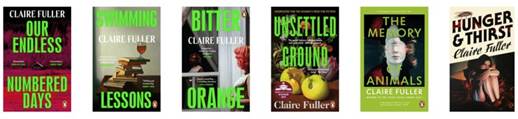
My sixth novel, Hunger and Thirst was published by Fig Tree/Penguin in May and is my first to be set in Winchester.
The main character, Ursula, works in the post room of the art school in 1987 and eventually becomes a famous and reclusive sculptor. She meets magnetic and unpredictable Sue, who dares her to kill someone and when she actually does, Ursula is haunted for the rest of her life.
Hunger and Thirst was read on BBC Radio 4’s Book at Bedtime – listen back via BBC Sounds
1990s
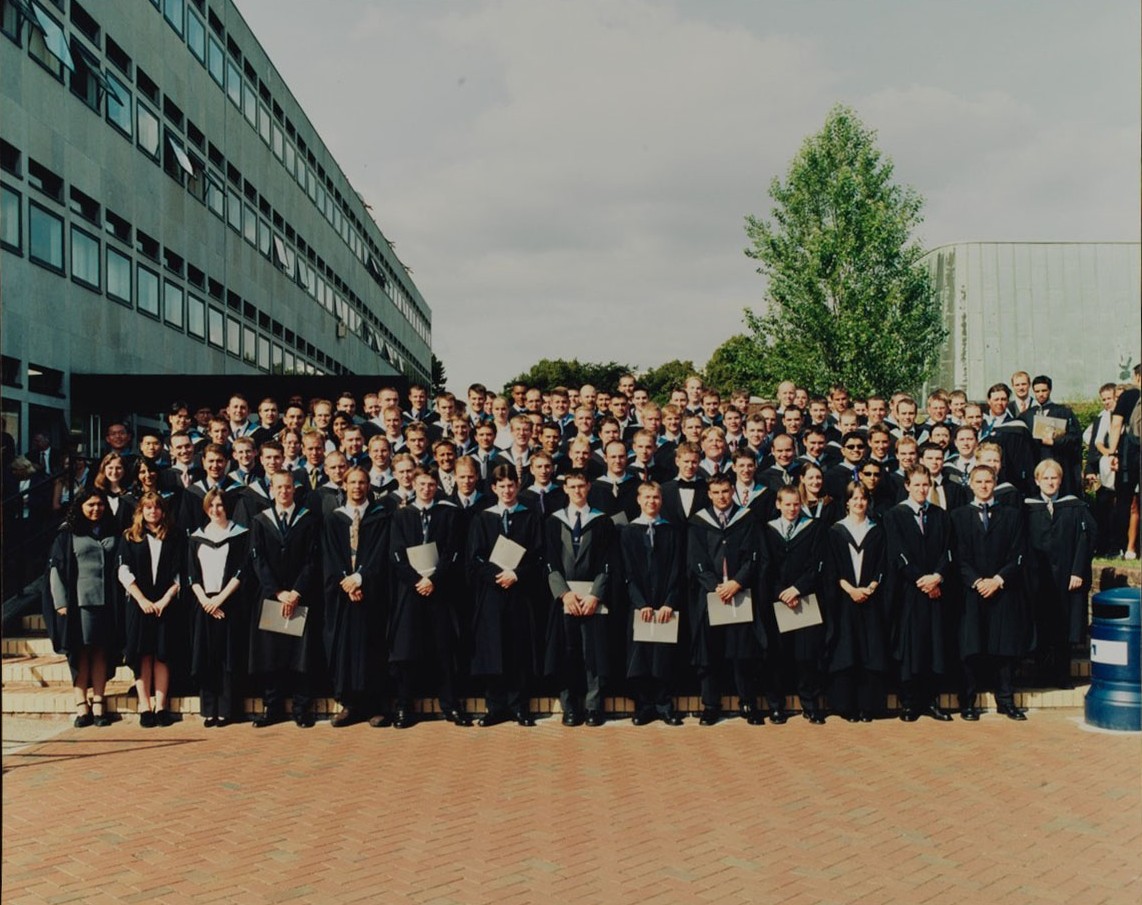
Calling all University hockey players from 1991-1994:
Southampton University Hockey Club, class of 1991, 1992, 1993 and 1994, are getting together at Wide Lane on Saturday 13th June 2026 for an alumni event organised by Ollie Tinson, on behalf of the current and recent alumni hockey club.
Matches start from 11am. All welcome.
2000s
The following entries were submitted as part of our Memories of Hartley Library exhibition, held in the autumn:
“Thank you for being my second home, my caffeine-fueled refuge, and the one place where procrastination felt slightly productive. From whispering group debates in ‘quiet zones’ to marathon sessions of ‘just one more reference’.
“You didn’t just store books, you stored memories. You taught me how to find knowledge, lose track of time, and master the art of pretending to read while people-watching.
“Forever grateful, Hartley – you made the stress of deadlines oddly bearable and the victory of finishing a dissertation feel like conquering Mount Everest… indoors.
“With love and a fond nod to your comfy chairs, a proud and slightly sleep-deprived alumnus.”
Wachira Boonyanet (PhD Business, 2002)
“Racing to get to the short-term loan section after a lecture. Some people dropping books out of a window on a Sunday (was not me!)”
Lucy Rawe (BSc Geography, 2000)
“I remember stumbling upon a hidden room in the library, a quiet archive where old books were kept. It was very dusty, tucked away, and incredibly peaceful. I preferred studying there because it was completely free of the usual distractions: no one walking past, no half-whispered conversations. Only a handful of people even knew it existed. The route to get there was so winding and obscure that I couldn’t retrace it today if I tried. I wonder if it’s still there.”
Oluwagbemileke Afariogun (MEng Electronics and Computer Science, 2004)
“Hartley library is the only reason I graduated with a 2:1. I could only study in total silence with no distractions. I started doing 9 to 5 days in the library to make sure I revised for finals. I inspired a group of my friends from Southampton Stags American football team to join me, and we all got through it together! I can’t believe that was 20 years ago! Feels like yesterday.”
Tamsin McKenzie (BSc Psychology, 2005)
Joy Igiebor (PGCE in Primary Education, 2005) has written her debut educational book (ISBN: 9781032991726) titled, ‘Doing Learning Development in Higher Education: A Practical Guide for New and Early Career Learning Developers’ , due to be published by Taylor & Francis Ltd. on 7 April 2026. The synopsis for the book is below:
Doing Learning Development in Higher Education is an essential introductory companion for those new to working in this emerging and exciting field. Filled with actionable tips, real-world advice and illuminating anecdotes, this book will help readers navigate the challenges and opportunities of helping students unlock their full academic potential, whilst highlighting the important role that Learning Developers have.
Covering the fundamental aspects of Learning Development practice, it explores everything from conducting effective workshops, collaborating with colleagues and students, leading tutorials, creating impactful learning resources and much more. Readers will gain valuable insights into building productive relationships with students and colleagues, understanding the wider institutional context, and charting their own professional development journey. Each chapter blends theoretical foundations with practical applications, providing the tools to make an immediate impact.
This practical guide will be helpful for new and early career Learning Developers working with undergraduate and postgraduate students across higher education institutions. It is equally valuable for early career academics and university staff in student-facing roles who wish to enhance their practice.
The book is currently available for pre-order in Waterstones and Foyles, as well as international retailers.
2010s

We are delighted to congratulate alumnus Tig Wallace on the publication of his debut novel, Storm Bringer.
Tig, who studied BA English and later completed an MA in Creative Writing at Southampton, has combined a passion for storytelling with a successful career in publishing.
The publication of Storm Bringer, the first book in his ambitious new young adult fantasy series, marks an exciting milestone in his journey. Set in a world ravaged by magical storms, the novel follows Amelio as he confronts extraordinary challenges in a richly imagined landscape where science and magic collide. Early reviews have praised its immersive world-building, compelling characters and exhilarating sense of adventure.
We warmly congratulate Tig on the publication of Storm Bringer, and wish him every success. We look forward to following the next chapter of his remarkable literary career.

2020s
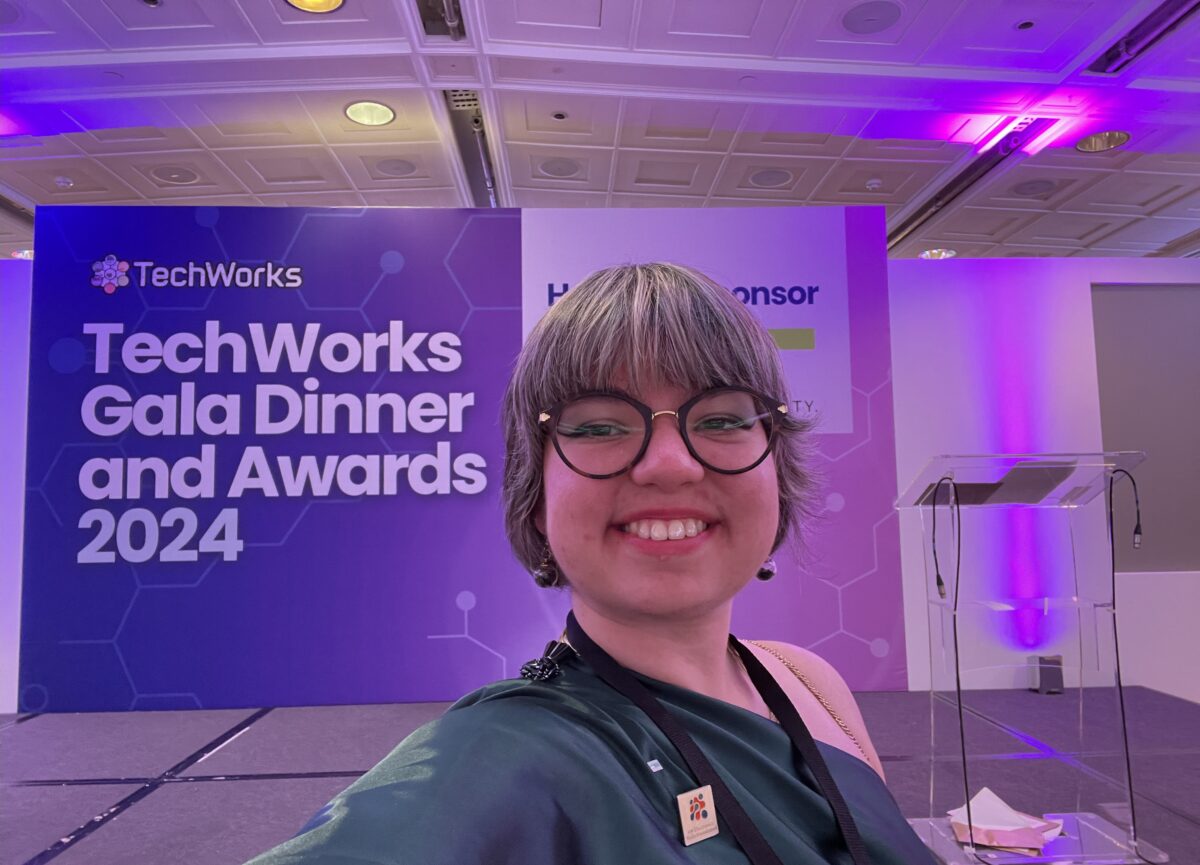
Oana Lazar (MEng Electronic Engineering with Industrial Studies, 2022) was shortlisted for the TechWorks Young Engineer of the Year Award 2025. The award celebrates ‘an engineer under 30, who has demonstrated significant achievements in engineering, business or personal development’. Oana is absolutely delighted to have been shortlisted for this award for the second year in a row.
Lulwah Alsane (MSc Education Management and Leadership, 2024):
“I’m thrilled to share an update on what I’ve been up to! My professional journey in education, which began in Kuwait as an Elementary Science Teacher in 2002, has taken an exciting turn. I later transitioned to a role as a Training Staff member in the practical education department at the College of Basic Education, Public Authority for Applied Education and Training.
“I recently completed my studies at the University of Southampton, and I have such beautiful memories of my time there. After attending the Language Institute, I successfully completed my Master’s degree in Education, specialising in Educational Administration and Leadership, finishing in November 2024 with honors. I started my Master’s program in May 2023.
“I benefited immensely from my professors, especially my Master’s thesis supervisor, Dr. Chris Brown, who provided invaluable guidance. The experience has enriched my understanding and approach to leadership in education.
“In my teaching career, I’ve always embraced innovation, including winning the first rank in the national Creative Robot competition in Kuwait in 2016 and passing numerous training courses, including a STEAM Education Training by the American BOEING Company. These experiences, combined with my master’s degree, have fueled my passion for developing school performance.
“I’m excited to apply this new knowledge to my work as a Specialized Trainer and continue to give back to the education community. I wish all my former classmates the very best!”
Obituaries
Jane Goodall
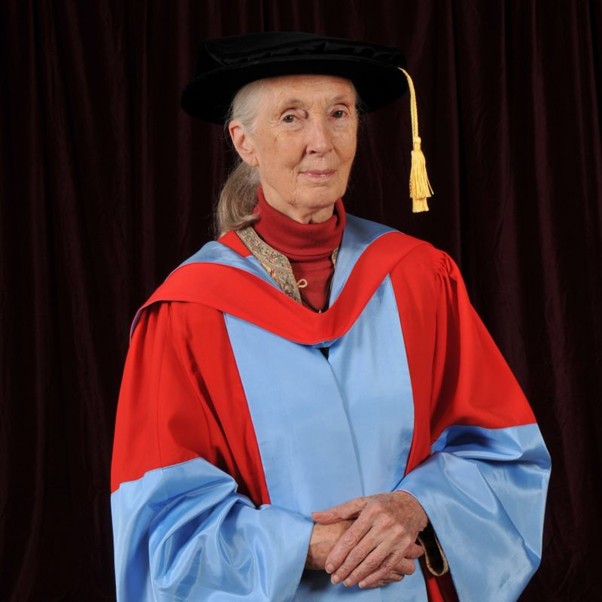
We were saddened to hear of the death of Dr Jane Goodall, who was awarded an Honorary Degree from the University of Southampton in 2019.
Dr Goodall was a committed conservationist and a world-leading expert on chimpanzees.
Vice-Chancellor, Professor Mark E. Smith, said: “Dr Goodall’s dedication to her work and inspiring others, particularly young people, leaves an incredible legacy.
“I hope her work and her leadership will continue to be a source of inspiration for many, including to future generations of scientists.”
Share an update or a special memory
Whether you’ve attended a reunion or meet up, are celebrating a special award or achievement, or would like to share an obituary with your peers, we’d love to hear from you. We invite you to share an update or a special memory of your time at university with your classmates in the Class Notes section of your alumni magazine, Hartley News.