
The four-minute test that could transform winter care
A new bedside test developed through collaboration between clinicians at the University of Southampton and industry engineers could help patients with flu, COVID-19 and RSV receive faster diagnosis and treatment, while easing pressure on hospitals during winter surges.
Enter any hospital emergency department in December, and the signs of pressure are everywhere. Beds lining corridors. Ambulances queuing outside. Staff stretched across wards dealing with huge numbers of patients coughing, wheezing and struggling to breathe. Last December, more than 3000 people a week were hospitalised with flu in England.
One factor compounding that pressure is the time it takes to diagnose viral infections such as flu. Doctors and nurses must rely on tests that can take several hours to return, often delaying treatment for the patient and putting other vulnerable patients at risk.
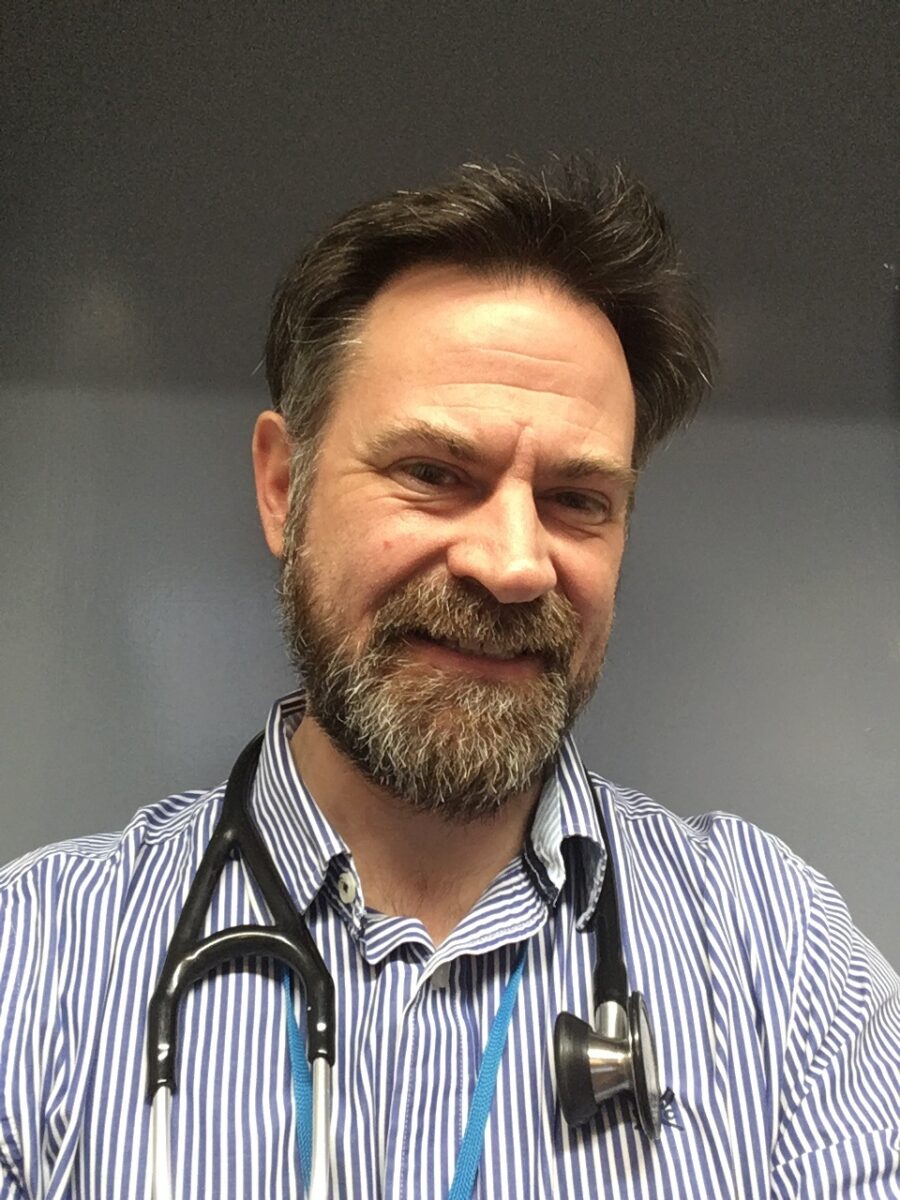
For the past decade, Tristan Clark, Professor of Infectious Diseases at the University of Southampton and honorary consultant at University Hospital Southampton (UHS), has been working to solve that problem – developing testing methods that speed up diagnosis and allow hospital staff to move patients along their clinical pathway more rapidly.
Now, a new collaboration bringing engineering and clinical care together could revolutionise the way respiratory infections are managed, both in and outside hospitals.
Every minute counts
When a patient arrives in the Emergency Department with an acute respiratory infection, the current standard of care is to test them with a rapid PCR test performed on a swab.
This is a highly accurate test that can detect even small traces of flu, COVID-19, and RSV. However, it can take up to two hours or more to receive the results, partly because testing is usually performed in centralised laboratories. Patients are left waiting hours to be diagnosed, and their move to a suitable area of the hospital for treatment can be delayed. With each rapid PCR test costing £40 to £50, a single hospital can spend well over £1million a year on testing alone.
“There are other tests called lateral flow tests, like the ones we all used during the pandemic, which are quicker and cheaper, but they are much less accurate than PCRs, which is why we don’t use them in hospitals, where a false negative result could lead to infected patients going unrecognised and transmitting their infection to other vulnerable patients,” Professor Clark explains. “What we really need is something that’s as cheap and easy to use as a lateral flow test, but as accurate as PCR.”
Until recently, that combination didn’t exist.
A new hope in testing
UK medical device company, Ediphor, has developed a new test using a technology called electrical impedance spectroscopy. It works by placing a patient’s sample on nanoscale carbon electrodes, each coated with an antibody that binds to a specific virus. When a virus like flu is present, its antigens attach to those antibodies and change the electrical signal on the electrode. The device detects that change and delivers a positive result.
The device, which is connected to an app on a handheld mobile device and can be done at the patient’s bedside, identifies flu, COVID-19 and RSV in just 60 seconds. The entire process, including sample collection, takes around four minutes.
Crucially, the test can be manufactured cheaply with estimated costs of between £2 and £3 per test, when produced at scale, which is over ten times cheaper than current rapid PCR options, and comparable in cost to a lateral flow test.
“This novel and exciting technology has the potential to be a real game-changer,” Professor Clark says. “Rapid, accurate diagnosis is crucial in hospital during winter surges, but current testing methods are still too slow and often very expensive. A cheap, accurate test which delivers results in just a few minutes could transform how we manage respiratory infections in hospitals as well as in other settings such as care homes and in the community.”
Ediphor approached to consult on the design of the device and he is now leading an independent trial. Delivered through the National Institute for Health and Care Research (NIHR) Southampton Biomedical Research Centre, the trial will test its performance against the existing gold standard PCR method, including testing the amount of virus it needs to deliver a result. Using samples from 300 patients with acute respiratory infection, he hopes to help build the evidence base needed for regulatory approval and wider NHS adoption if the test proves to be accurate and reliable.
Professor Clark believes the technology could also positively impact respiratory infections in the community too. He adds: “If it proves successful, it could mean there is a cheap, easy-to-use option for GP surgeries and care homes, where early detection could stop patients deteriorating to the point of needing to come to hospital at all, and could also prevent spread to others.”
From decades of research to real-world impact
This latest trial builds on more than a decade of point-of-care testing research. In 2014-2018, Professor Clark led two landmark trials at UHS, enrolling over 1300 patients with acute respiratory illness, showing that bedside testing allowed patients who tested positive for flu to be isolated and given antiviral medication more quickly than those receiving standard care. Published in The Lancet Respiratory Medicine, the findings helped shape national guidance on respiratory diagnostics.
When COVID-19 hit, Professor Clark’s team analysed point-of-care testing for COVID-19 and subsequently deployed point-of-care testing across University Hospital Southampton delivering results in around 100 minutes compared to nearly 24 hours for standard laboratory PCR. Patients were moved to the appropriate ward almost four times faster and were less likely to develop hospital-acquired COVID-19. He then worked with NHS England to roll out point-of care-tests for COVID-19 into Emergency Departments around the country.
As well as developing faster point-of-care testing methods for respiratory viruses, Tristan is exploring whether they can be used to tackle one of the most urgent crises in global health: antimicrobial resistance (AMR).
AMR occurs when bacteria, viruses, fungi and parasites no longer respond to antimicrobial medicines. It currently kills around 1million people per year globally and is predicted to kill more people than cancer by 2050.
In November 2025, Professor Clark was awarded a prestigious NIHR Research Professorship, with £2million of funding, to evaluate two rapid diagnostic tests called host-response tests, which measure the patient’s immune response in the blood to identify whether a patient has a viral or bacterial infection.
He says: “Infection is a major cause of hospitalisation and death, and antimicrobial resistance threatens to reduce the effectiveness of antibiotics across all of healthcare. If they are accurate, these novel tests may help us use antibiotics more appropriately and improve the care and outcome of patients with infection across the NHS whilst reducing AMR.”
Innovation through collaboration
Underpinning Professor Clark’s research is the belief that the diagnostics with the greatest potential to improve patient care emerge from collaborations that extend beyond medicine to include engineering and computer science.
These collaborations sit at the heart of the University’s vision for the new Institute of Medical Innovation (IMI), which Professor Clark has been closely involved in shaping and where he will be based when it opens. Professor Clark’s two areas of research – respiratory health and AMR – are two disease areas the IMI will focus on.
“For me, the IMI is particularly pertinent,” he says, “because it allows me to network and collaborate with engineers who have ideas for novel biosensors that I would not really have the chance to meet otherwise. Physically co-locating people in a new building will facilitate collaboration and conversations. They need clinical partners, and we need to work with people who are creating clinically informed diagnostics. It has massive potential to create a step-change in diagnostics.”