A life shaped by light
Dr Efstratios (Stratos) Kehayas (BEng Electronic Engineering, 2001) is President of Photonics at G&H (Gooch & Housego), a leading manufacturer of optics, photonics and life sciences technologies. Originally from Greece and now based in the USA, Stratos reflects on how his time at the University of Southampton shaped both his career and his life.
Adventure from the beginning
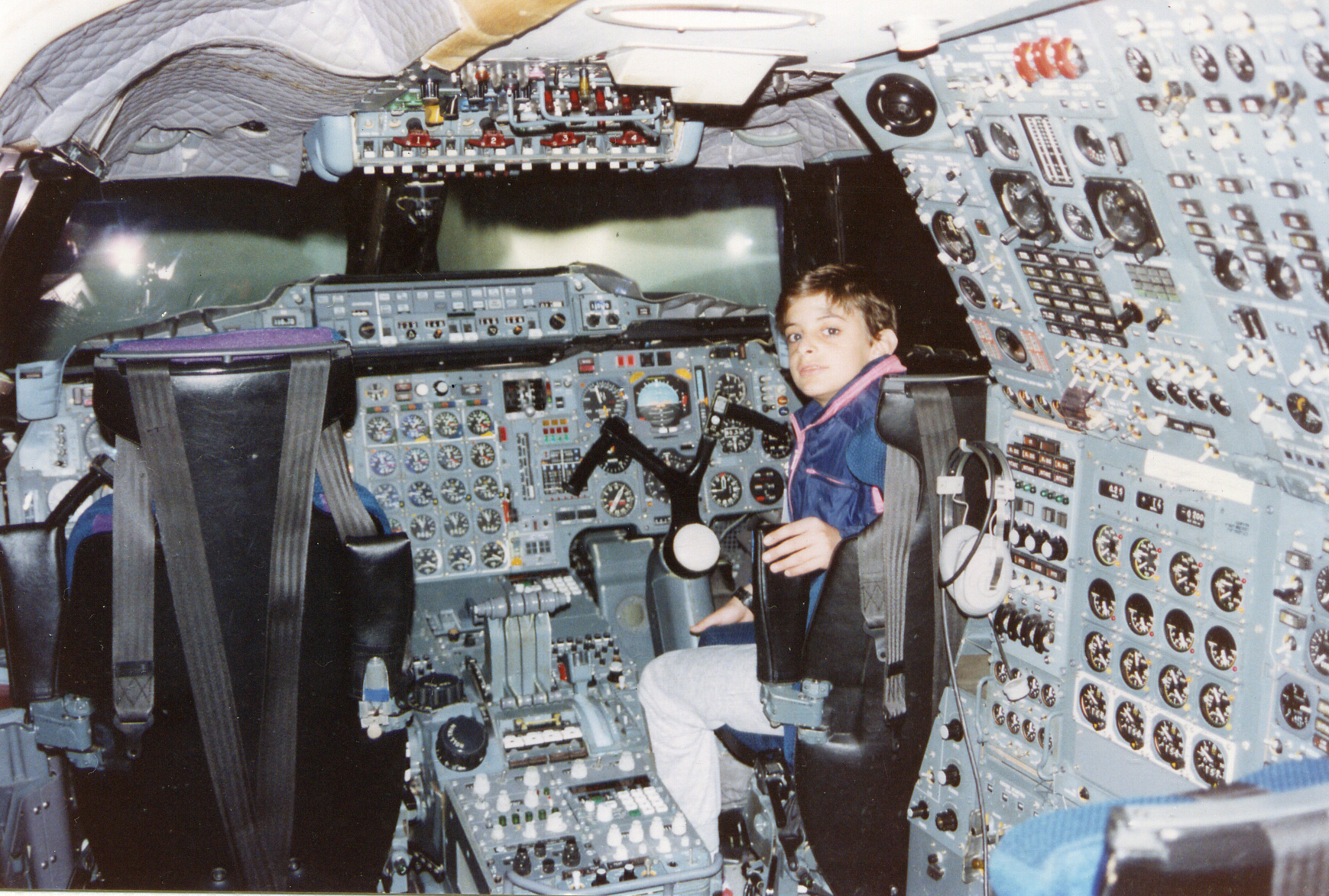
Growing up in a family connected to aviation meant that adventure was part of my life from the beginning. With both my parents and my older brother working as flight crew, travelling the world and discovering new people and places felt almost natural to me. Although I did not follow exactly in their career footsteps – thanks to my father encouraging me to broaden my horizons – that sense of curiosity stayed with me. So when the time came to choose a university, I knew I wanted to study beyond my native Greece. A strong British pound and a weak drachma created real headwinds, but my parents made the choice every parent hopes to make: to invest in their child’s future.
In terms of the subject I’d be following, the field of photonics came into my life very early when a good friend showed me a university brochure. It was love at first sight. What inspired me most was discovering how much we can do with the power of light. So I ended up applying to the University of Southampton to quench my thirst for adventure and explore the world of photonics.
Why Southampton
The University of Southampton’s reputation spoke for itself. What led to my decision to study here was a combination of factors: the impressive campus, its breathtaking coastal location, and the School of Engineering’s curriculum, which included fibre optics, semiconductors and microelectronics. The University’s Optoelectronics Research Centre (ORC) was also renowned, particularly for its research-intensive focus on photonics. Guiding laser light through glass sounded so cool. The whole centre embraced an international atmosphere, with students from more than 40 nationalities. The moment you stepped into one of the many photonics laboratories, you would get excited because you knew this was the place where innovation happened. Before I knew it, I had been accepted into the School, along with the Greek friend who first introduced me to the idea.
A memorable arrival
I will never forget my first day on campus. I was barely 18 years old, immersing myself in this new universe. My friend and I flew into London, got the bus to Southampton Central, and then took a taxi. The driver asked, ‘Where to, lads?’ We looked at each other and excitedly said, ‘To the University!’ We arrived on campus on a Sunday afternoon with several large suitcases packed by our Greek mothers as if we were relocating to Australia! Without Siri or Alexa back then, we tried to find the administration building, which was, of course, closed on a Sunday. I still remember the dad who had just dropped off his son at another residence hall. He stopped because he realised, from how lost we looked, that we needed help. We never caught his name, but we still refer to him as ‘the Good Samaritan’. He offered us a ride to Highfield Hall in his station wagon so we could settle in for the night. We packed our life’s belongings into that car and were on our way. That man made sure we were registered and had a room for the night. That day, we witnessed British culture at its best, something I will always be grateful for.
Learning from pioneers
To this day, I vividly recall my lecturers and the classes I took: Greg Parker, my tutor; Harvey Rutt, my thesis supervisor; Rob Eason, who had spent time at the laser centre in Crete; Michalis Zervas and his fibre Bragg gratings. All the professors I had the privilege of meeting during my student days were systematically preparing me for a career in optics and photonics while also shaping me as a human being. Academically, their expertise was unmatched. As people, they served as examples.
Putting theory into practice
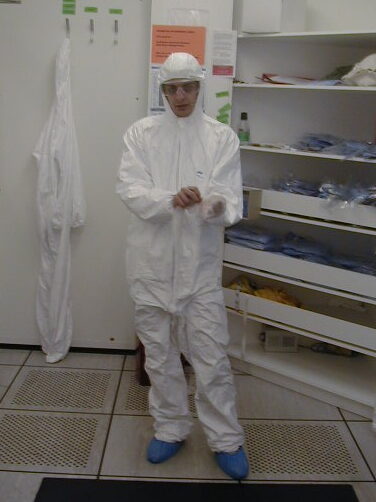
Some things that were crucial in helping me build a strong technical foundation were the laboratory courses and special photonics projects. Applying theory to practical problems was such a powerful experience. For example, one project had us design an integrated circuit. We ended up making it using the University’s semiconductor fabrication equipment. We then had the design tested by probing the section of the silicon wafer containing our implementation. It was a fantastic innovation ecosystem: using an integrated circuit design course to teach undergraduate students by having their designs taped out, while training postgraduate students in semiconductor fabrication. It all came naturally under the same roof.
Friendships that endure
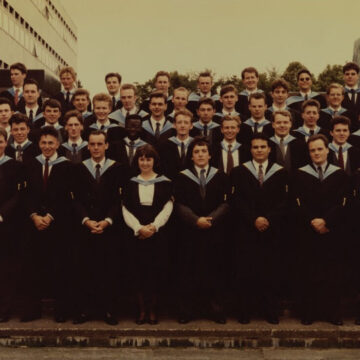
Strong friendships were forged during those days, both inside and outside the classroom. I am still grateful to Mei Fong and Celina for giving us their lecture notes for the classes we had missed because of the Tuesday student nights at New York New York.
I am still very close with the legendary ‘crew’ of 355 Burgess Road, made up of Alexander, Alex and Dimitri. Although our alumni group is spread across the four corners of the world, we still keep in touch. A great example is Andy, who is now in Singapore and enjoying a successful career as a photonics executive. Even though we are continents apart, we remain in close contact. I would also be remiss if I didn’t mention the ‘Greeks of the ORC’, Stavros and Periklis, who were PhD students back then and have since become highly successful professors. So many connections, forged so long ago, yet still thriving today.
Talking about life-changing moments, I was certainly not expecting to meet Anna while trying to navigate university life. Fast forward to today, and we are still happily married, raising our three beautiful children.
A foundation for the future
Having the University of Southampton as my alma mater certainly represents a cornerstone moment, one that has defined the rest of my life in so many ways. I joined a high-performing department with a world-leading research and development centre. Learning from all the professors I had classes with, seeing the brilliant spinouts and being part of such an innovative ecosystem was an intense and exciting experience that underpinned my entrepreneurial career in the years that followed.
I went to get a degree and left with so much more: knowledge, dreams, ambition and even my future wife. What more can someone ask for? I will never forget those years in Southampton.
Advice to my younger self
If I could go back to 1998 and give my younger self some advice, I would begin with this: a degree gives you knowledge, but its real value lies in how you apply it. Information is more accessible than ever; what matters is the judgment to use it well — to make better decisions, solve meaningful problems and advance new ideas. Southampton gave me a strong technical foundation, but more importantly, it taught me how to think. That is something you must keep developing. The world changes quickly, and the most important lesson is to never stop learning.
I would also tell myself to hold on to the relationships formed at university. The people you meet can have a major influence on your life and career many years later. Stay connected with your professors. They have a wealth of experience, and their role does not necessarily end when you graduate. They will often be happy and eager to offer advice.
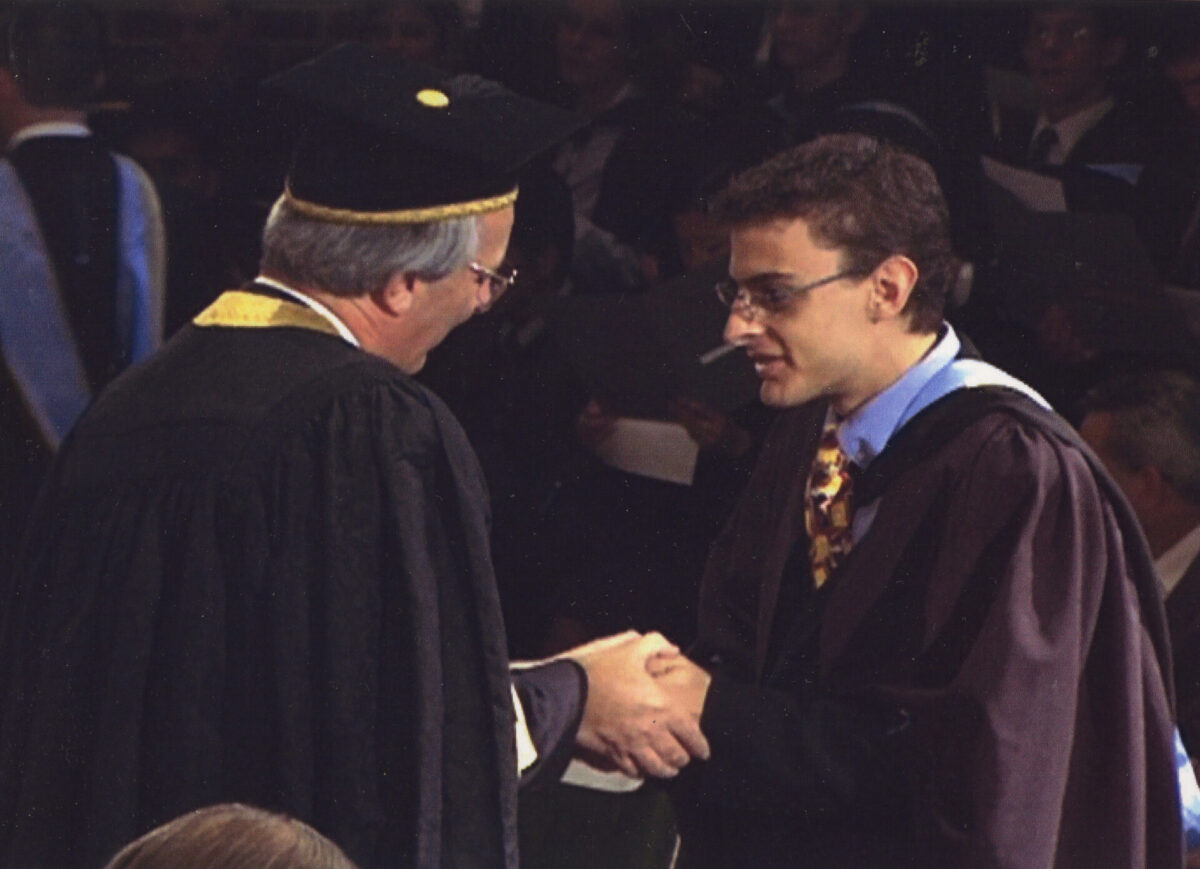
Finally, I would remind myself that success is not measured by intelligence alone. Talent may open doors, but discipline, resilience and curiosity are what carry you forward. Keep challenging yourself, but do so with perspective: progress matters more than perfection. And do not become so focused on reaching the next milestone that you forget to appreciate the journey itself. Life will offer more possibilities than you can imagine, and the choices you make along the way will shape the person you become.
Find your local alumni network
Stay connected with the University of Southampton wherever you are. Join your local alumni network to meet fellow graduates, share opportunities, and be part of our global community.
About Stratos
Since 2018, Stratos has been a member of the Executive Team at G&H (Gooch & Housego), where he has served as President of Photonics following roles as the group’s Chief Technology Officer and Chief Commercial Officer. He was also the founder of Constelex, a start-up specialising in space photonics and satellite laser communications, which was acquired by G&H in 2013.
He combines broad expertise across photonics with specialist knowledge of fibre-based systems and integrated photonic components for communications, aerospace and laser-based manufacturing. Alongside his BEng from the University of Southampton, he holds an MSc from Imperial College London and a PhD from the National Technical University of Athens. A Senior Member of OPTICA and IEEE, he has served as a subcommittee member and workshop organiser for international conferences including Optical Fiber Communication Conference and Exhibition (OFC) and European Conference on Optical Communication (ECOC). He has authored more than 100 peer-reviewed journal and conference papers, including invited and post-deadline papers, and holds six patents.