From days in the lab to minutes at the bedside: A simple paper test for cancer treatment complications
Southampton researchers are developing a simple paper test to help doctors catch a dangerous side effect of some of the most effective cancer treatments available today in minutes, instead of days.
The test could change how quickly a patient at risk gets the right care.
Catching the storm
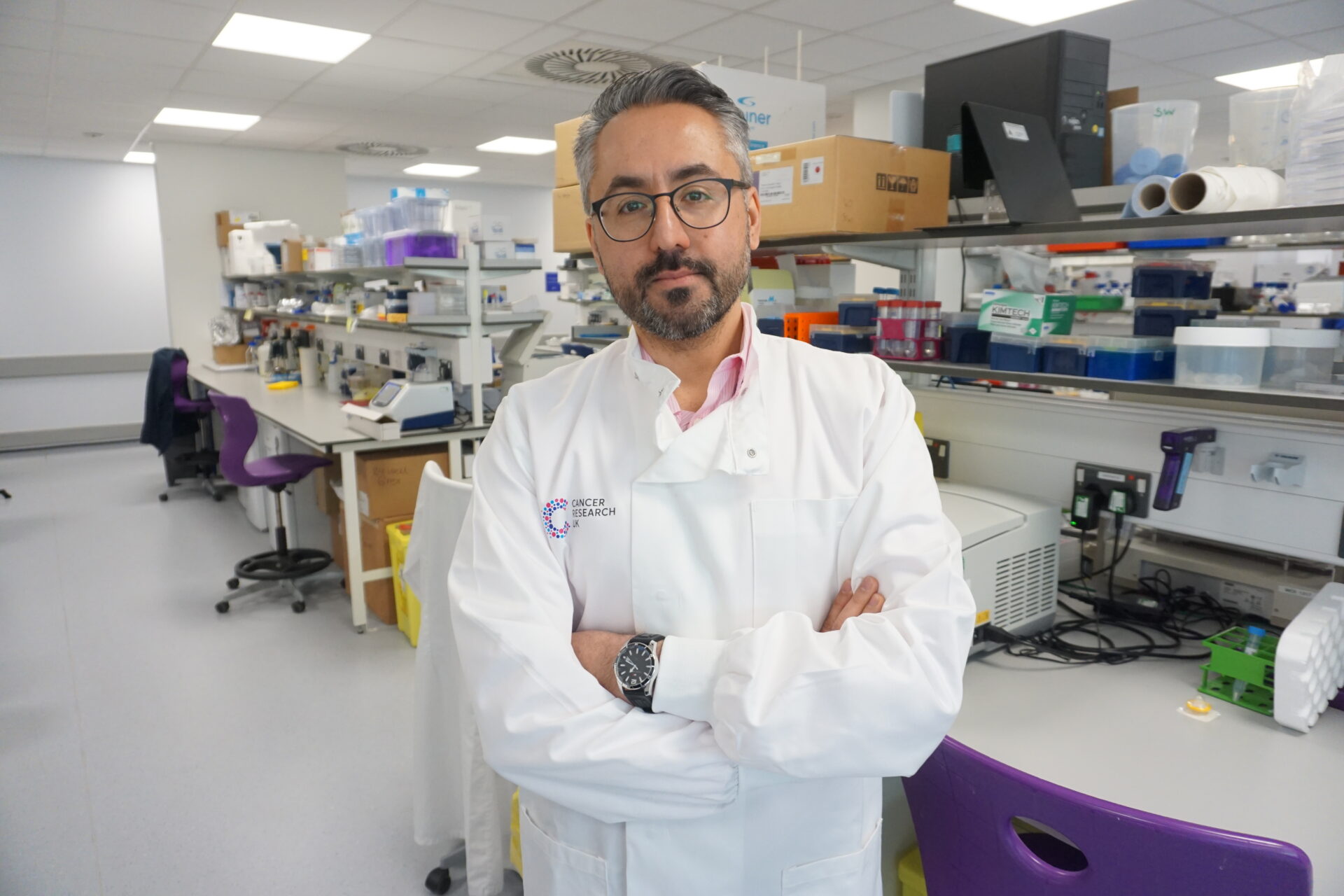
“Harnessing the body’s immune system to fight cancer is producing remarkable results in patients around the world,” explains Professor Ali Roghanian, a cancer immunologist at the University of Southampton’s Centre for Cancer Immunology.
“Treatments such as CAR T-cell therapy, which is carried out here in Southampton and where a patient’s own immune cells are reprogrammed to find and destroy cancer cells, are proving highly successful, offering hope to patients who have run out of other options.
“But harnessing this power can come with a cost.”
In some patients, the immune response becomes so intense that large amounts of inflammatory proteins called cytokines are rapidly released into the bloodstream. This can trigger a serious side effect known as a cytokine release syndrome (CRS), sometimes called a “cytokine storm”.
The symptoms build fast: fever, chills, rashes, low blood pressure, breathing trouble, confusion, seizures. Left unchecked, a patient’s organs can shut down within hours.
Early detection is vital. Our team believes a simple strip of paper could make all the difference.
A cancer test that works at the bedside
A new three-year project brings together University of Southampton experts in photonics, cancer immunology and critical care medicine to develop a paper-based test that can detect a cytokine storm earlier, giving doctors the time they need to act.
Ali, who is one of the project leads, says: “Currently, measuring cytokines in a blood sample can take one to two days in the laboratory.
“But a cytokine storm can become critical within hours. Clinicians need to know what’s happening much sooner, which is why we’re working towards a test that could provide rapid information at the bedside.”
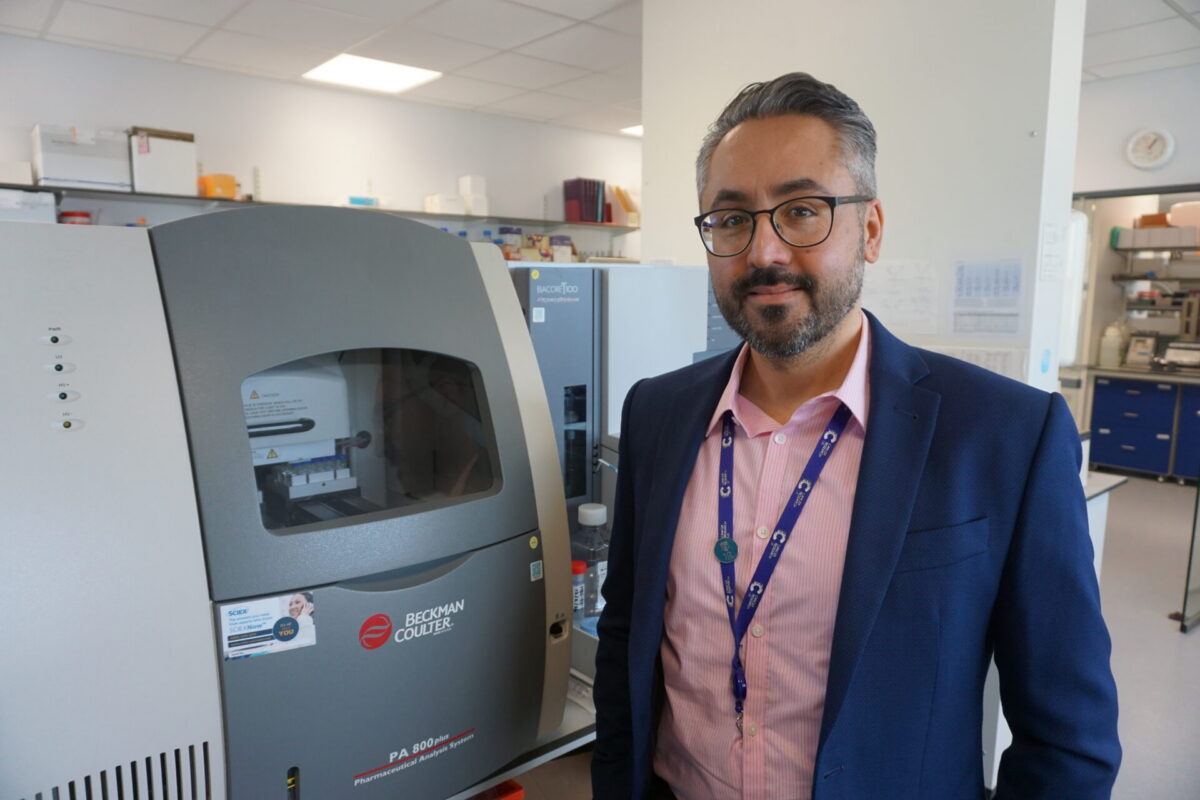
Which is where Dr Collin Sones’s team comes in. For more than a decade, based at Southampton’s Optoelectronics Research Centre, Collin has been developing techniques for making paper-based diagnostic tests using a laser-based technology.
A standard lateral flow test, like the ones used during the pandemic, uses a patient sample such as blood or urine, which travels along a paper strip and interacts with antibodies engineered to recognise a disease-specific marker. If the marker is identified and captured, a coloured line appears.
Collin’s method involves printing fine lines of a light-sensitive material onto that paper, then hardening them with a beam of light into solid partitioning-walls to form separate flow channels within what would otherwise be a standard, single-channel strip. This matters because a cytokine storm isn’t caused by one marker alone. The test is therefore designed to have multiple channels, each designed to detect a different biomarker linked to the inflammatory response. It can also be produced at a lower cost.
“Doctors have told us they need answers in minutes, not days, and they need to trust what the test is telling them,” Collin says. “That’s what we’re building towards: a result fast enough to act on, and reliable enough that a clinician can make a real decision from it. If we get that right, it could change how quickly a patient gets the right treatment.”
Bringing the right people together
The project, funded through UK Research and Innovation’s (UKRI) Engineering and Physical Sciences Research Council (EPSRC) Health Technologies Connectivity Awards, started with a conversation.
During a routine catch-up, Collin and Ali were discussing how technologies developed by their teams in different parts of the University could be combined to solve problems clinicians face on hospital wards. That conversation became a proposal, and the proposal became a project to detect CRS faster.
It’s the kind of multidisciplinary collaboration Southampton is built for. The biggest problems in healthcare don’t respect subject boundaries. But here, well-established, successful relationships between the hospital, engineering and the cancer research labs meant it is easy to get the right people, whatever their discipline, into the same room to meet these challenges head-on.
Professor Ahilanandan Dushianthan, known as Dushi, a critical care consultant who treats CRS patients on the ward, and Dr Robert Lown, a haematologist who gives CAR-T therapy to lymphoma patients, joined the project, ensuring every aspect had the patient at its core.
“CRS is a real threat to our patients, but a quick test that can be done at the bedside could help us identify high-risk patients sooner, This practical diagnostic tool could help us provide more targeted care faster to ultimately save lives,” Dushi says.
Rob adds: “This collaboration with the University represents an important step in ensuring that Southampton continues to lead the way in delivering better cancer treatments and translating research innovations into patient benefit.”
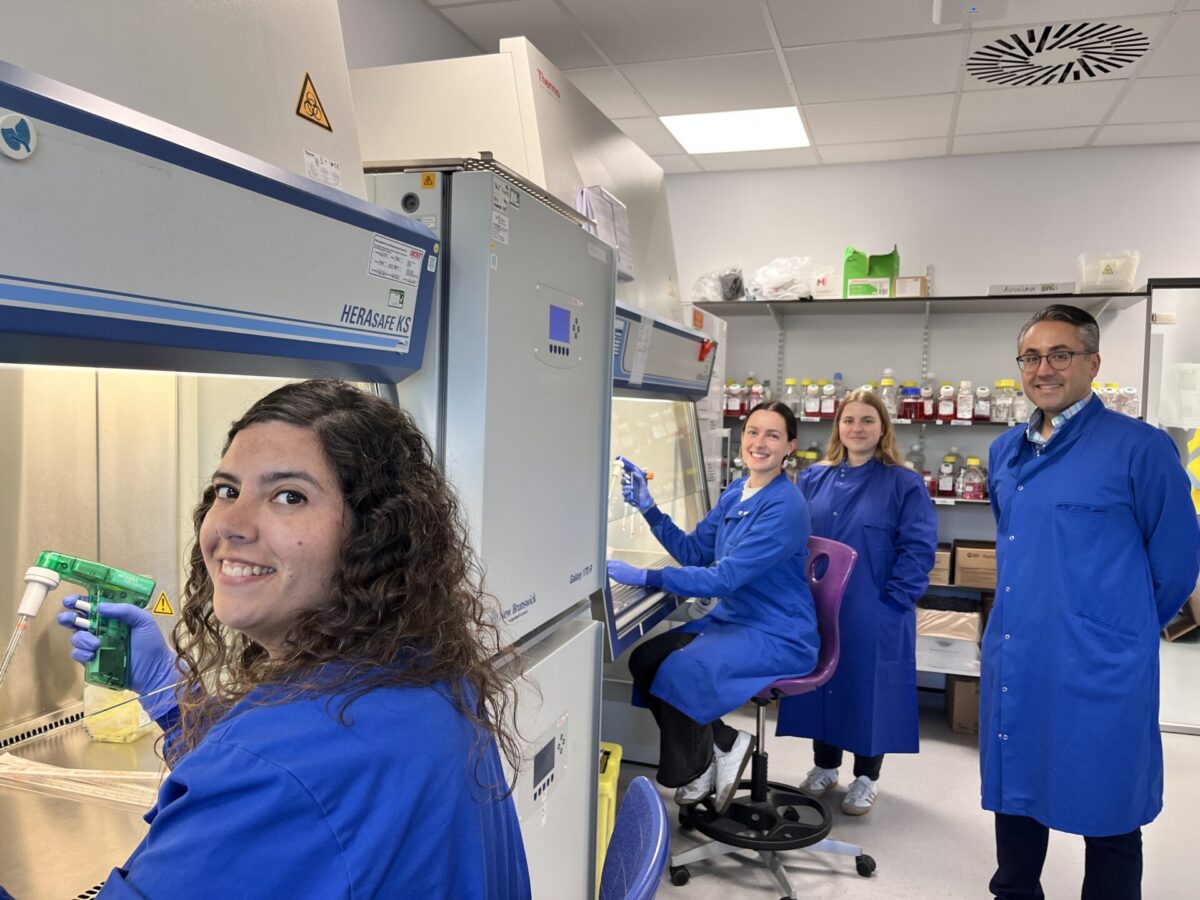
The grant also funds placements that put researchers into each other’s world: engineers spending time in the immunology labs and intensive care units, and vice versa, ensuring the test is shaped by how clinicians actually work and what they need, and not just what’s possible in a lab.
This interdisciplinary working is central to the University’s vision for its new Institute of Medical Innovation (IMI), based at Southampton General Hospital, which will bring medicine, computer science and engineering into one building to speed up the development of new treatments.
Alongside cancer, the IMI will focus on four other disease areas connected by a misfiring immune system: dementia, sight loss, infection, and respiratory and allergic conditions.
Ali adds: “What makes Southampton unique is how interconnected and interdisciplinary we actually are. It’s more than goodwill between departments: working in the same space means the right people can come together quickly to tackle real clinical problems. The IMI will take that collaboration even further.”
Personal motivation
For both Collin and Ali, there is a personal element to the project. After working as a Lecturer in India, Collin joined the University of Southampton 26 years ago, first as a PhD student. While in India, he was hospitalised twice with serious illnesses, and says these experiences give him that extra motivation. “There’s so much need,” Collin says, “and we have the technology, the skills and the possibility to deliver something tangible that can help people. Even if we save one life, that will be an impactful achievement.”
For Ali, after nearly two decades at the University, it’s watching basic scientific research reach the bedside that keeps him going. “I always want to work on projects that have a translational nature, whether that’s immediately or in the future. A lot of our antibody work done over several years is now finding its way into clinics around the world and successfully treating patients with advanced cancers, which is very rewarding.”
Next steps
The team will now identify the most suitable antibodies, use them to develop the test and thereafter validate it using samples from real patients to compare how reliably the strip performs against the current laboratory-based standard. A clinical feasibility study will follow.
The project is still at an early stage, but the ambition is simple: a test that is affordable, easy to use and portable enough for the bedside, giving doctors rapid information that could help them act when every hour counts. If it works, it could become a model for how paper-based diagnostics help identify other fast-moving medical emergencies, not just this one.