The phage frontier:
Is the answer to antibiotic resistance lurking in your loo?
Infectious diseases are becoming harder to treat with conventional medicines, such as antibiotics. It’s a problem known as antimicrobial resistance, or AMR. Dubbed ‘the silent pandemic’, AMR is set to claim as many deaths as cancer by 2050. As treatment options continue to decline, it becomes increasingly difficult for our doctors to manage common infections, perform life-saving surgeries, and deliver vital therapies – putting patients at greater risk and worsening health outcomes.
Esme Brinsden, Science Communicator at the Phage Collection Project (and University of Southampton biology graduate) explains:
“AMR is a problem that affects all of us. Locally to us in Southampton, we can already see the impact, with patients presenting with chronic infections caused by antibiotic-resistant bacteria.”
Here at the University, our researchers are working hard to improve treatments and address the urgent need to find alternatives options.
Bacterial eaters
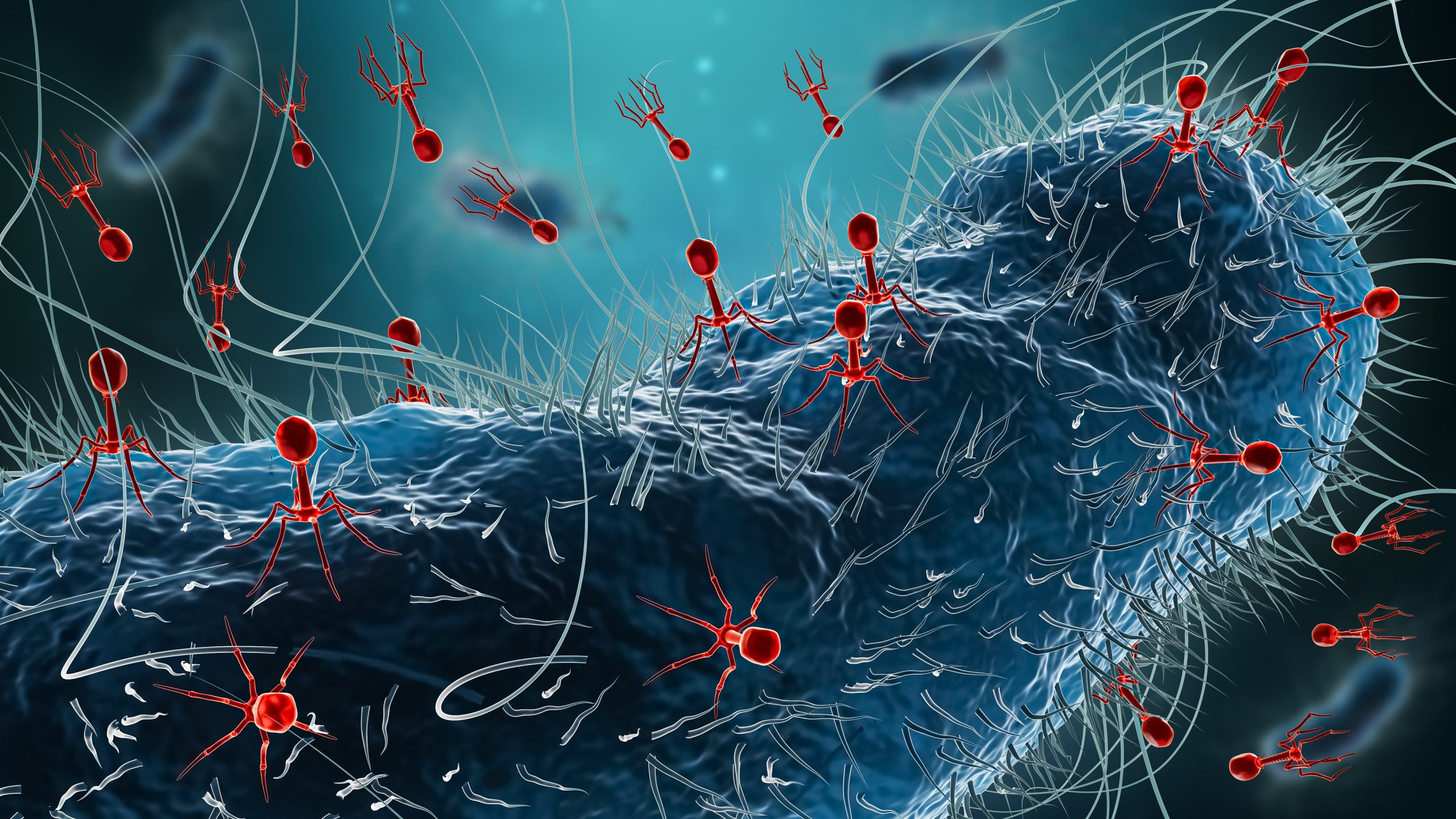
One such alternative is bacteriophage therapy, with phage meaning ‘to eat’. Unlike other viruses which can infect and cause damage to human cells, phages only infect and kill bacteria, rendering them harmless to humans. And, where antibiotics use a broad-stroke strategy to cover a variety of bacterial strains, phages offer a much more targeted approach.
Phages are all around us and can be found in any environment where bacteria grow, in oceans, soils and lakes, and within our own bodies. They can also be found in – you guessed it – our loos, as well as other water sources such as rivers and ponds.
And that’s where the team at Southampton’s Phage Collection Project are calling for our help.

Become a citizen scientist
Led by a team of early career researchers that includes donor-funded PhD scholar Emma Hardy, Southampton’s Phage Collection Project is developing an extensive phage biobank, helping us to learn more about the tiny viruses that could hold the power to tackle the AMR crisis.
They’re asking all of us to become ‘citizen scientists’ and collect samples from the environments around us. As Esme explains:
“By ordering a sampling kit through our website, you can collect and post a sample of water from your local environment, like a pond or river, or even from your own toilet, and send it back to our lab where our researchers will then analyse the sample.”
Not all phages are suitable for successful therapeutic use, so a large part of the work the project team do is to distinguish the phages that effectively kill bacteria from those that don’t. If the sample you submit leads to a successful outcome, you’ll even get naming rights.
And the more samples they receive, the better their chances of finding viable antibiotic alternatives. Esme says:
“We want to continue expanding our phage biobank with the help of citizen scientists, so that we can design phage therapies which effectively kill a greater diversity of antibiotic-resistant bacteria. We also hope to continue working with policymakers to inform and shape phage therapy legislation and design clinical trials for this experimental medicine in the UK.”
Other ways we’re tackling AMR at Southampton
Dr. Adam Dale, Associate Professor in Infectious Diseases and Medical Microbiology, summarises Southampton’s innovative approach to tackling AMR and infectious diseases, and introduces us to Becca, whose life has been forever changed by infectious disease.
“Without active antimicrobials, the outcome for Becca would certainly have been much worse and likely would have been fatal. The threat of AMR as it relates to cases like Becca is that in future we might not be able to treat these rapidly progressive infection syndromes with appropriate antibiotics, which would result almost certainly in poor outcomes for patients.“
Announcing the Institute for Medical Innovation: A £100m landmark for health research in Southampton
We are proud to unveil plans for a groundbreaking new medical institute in Southampton which will bring the greatest minds in medicine, computer science and engineering together in one brand new building.
The pioneering Institute for Medical Innovation (IMI) is a joint initiative between the University of Southampton and University Hospital Southampton NHS Foundation Trust.
Based at Southampton General Hospital, the £100m facility will bring researchers and medics together in the fight against devastating diseases such as cancer, dementia, sight loss, infectious diseases and respiratory and allergic conditions
At the heart of this visionary project is collaboration. By co-locating researchers, clinicians and engineers in a cutting-edge environment, the IMI will foster a new era of translational research – turning scientific discovery into real-world medical breakthroughs.
Professor Paul Elkington, Director of the Institute for Medical Innovation, shared his vision for how the work of the Phage Collection Project – and other groundbreaking research initiatives happening at Southampton – will benefit from the facility:
“The Institute for Medical Innovation will be ideally placed to translate this type of fundamental understanding into new treatments, by bringing scientists and clinicians together with a shared goal of transforming approaches to disease. The environment will support the basic science, but equally provide access to patient samples from the hospital to test the new treatments, and provide a pathway from discovery to implementation.”
This is just the beginning. In the coming months, we’ll be revealing much more as we launch our biggest ever fundraising campaign to make this new institute possible – and there will be plenty of opportunities for you to get involved and make a real impact. Stay tuned and, in the meantime, discover more about what’s ahead.